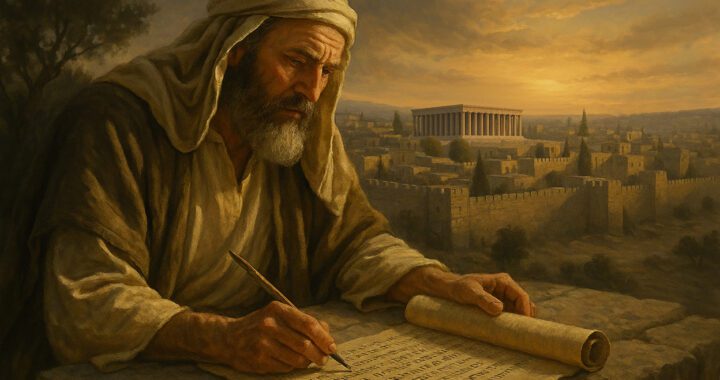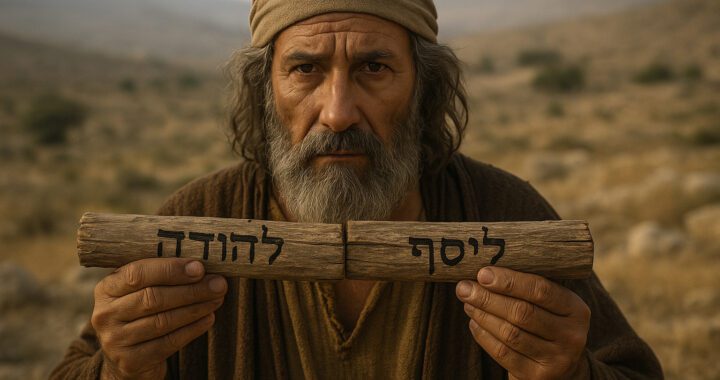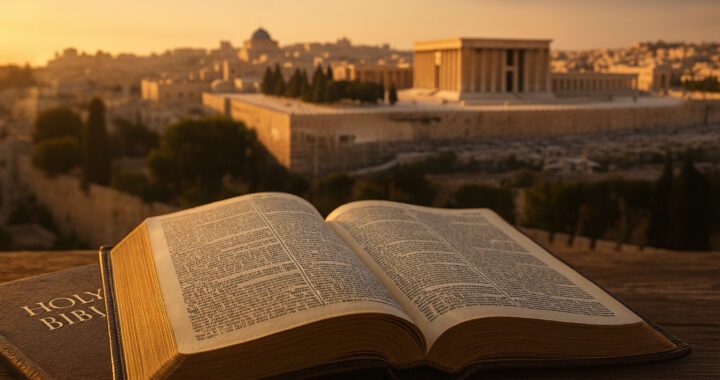
The Bible is a storyline spanning Genesis to Revelation, replete with interactive themes similar to subplots that contribute to the main plot of a novel. Scholars summarize the key theme of God’s story in different ways. The term “restoration” captures the Biblical narrative well. The storyline from Genesis to Revelation unfolds God’s plan to restore what Adam’s race lost in disobedience to its Creator. A major theme in the restoration process is the nation of Israel.
Through a series of covenants, God chose Israel to be the channel through whom ultimate restoration would happen. These covenants contain important strands of truth that help us trace God’s purpose to restore all things. This article presents two story lines woven into the Abrahamic and Davidic Covenants that highlight God’s ongoing purpose for Israel. They are blessing (Abrahamic Covenant) and dominion1 (Davidic Covenant).
PRE-COVENANT BLESSING AND DOMINION
Blessing and dominion originate in the creation account of Genesis 1, long before God made a covenant with Abraham. Both of these storylines are a part of God’s creative purpose for humanity and emerge together in Genesis 1:28: “And God blessed them, and God said unto them, Be fruitful, and multiply, and replenish the earth, and subdue it: and have dominion over the fish of the sea, and over the fowl of the air, and over every living thing that moveth upon the earth.” The blessing of God on humanity included the privilege of exercising dominion over the creation. That is to say, humanity was blessed with the authority to reign as God’s steward or vice-regent.
Adam surrendered the blessing when he rebelled against God’s perfect design, and with the blessing went the dominion. In their place came the curse recorded in Genesis 3. That is not to say that humanity lost all ability to multiply and subdue the earth, but that sin crippled humanity’s ability to represent God as his vice-regent over the creation.2 God graciously promised a solution that would restore what was lost, often called the protoevangelium, or first good news: “And I will put enmity between thee and the woman, and between thy seed and her seed; it shall bruise thy head, and thou shalt bruise his heel.” (Gen. 3:15). Strikingly, God uttered this promise not to Adam, but to the serpent, a subtle hint that the epic conflict that ensued at the fall was not between God and humanity, but between God and Satan.
Humanity shunned the blessing of multiplying and filling the earth and insisted on staying in one location to make a name for itself. At the tower of Babel, wicked leaders uttered their evil resolve:
And they said one to another, Go to, let us make brick, and burn them throughly. And they had brick for stone, and slime had they for morter. And they said, Go to, let us build us a city and a tower, whose top may reach unto heaven; and let us make us a name, lest we be scattered abroad upon the face of the whole earth. (Gen. 11:3-4).
THE ABRAHAMIC COVENANT
At this low point in human history, the Creator broke through to utter his holy resolve to a man from Ur of the Chaldeans and initiated the Abrahamic Covenant. The chapter division makes it easy to miss the contrast between man’s evil resolve in Genesis 11 and God’s holy resolve in Genesis 12:
Now the LORD had said unto Abram, Get thee out of thy country, and from thy kindred, and from thy father’s house, unto a land that I will shew thee: And I will make of thee a great nation, and I will bless thee, and make thy name great; and thou shalt be a blessing: And I will bless them that bless thee, and curse him that curseth thee: and in thee shall all families of the earth be blessed. (Gen. 12:1-3).
The contrasts between chapters 11 and 12 are clearly intentional:
| CHAPTER 11 | CHAPTER 12 |
| Humanity speaks. | God speaks. |
| Humanity reaches up to the heavens to be blessed. | God reaches down from heaven to bless. |
| Humanity says, “Let us…” (3 times). | God says, “I will…” (5 times). |
| Humanity desires to make a great name for itself. | God determines to make Abram’s name great. |
| Humanity wants to hoard its goods in one place. | God wants to extend his blessing everywhere. |
The Abrahamic Covenant stood in stark contrast to the whims of rebellious humanity. God formed a new nation through whom his blessings would extend to the whole world. From Genesis 12 forward, God continued to display his covenant faithfulness to Israel despite her stubborn refusal to embrace his promises. In due time, the ultimate seed of Abraham came, through whom the fulfillment of the covenant became possible (Gal. 4:4-5). Paul refers to this seed as a singular person in Galatians 3:16: “Now to Abraham and his seed were the promises made. He saith not, And to seeds, as of many; but as of one, And to thy seed, which is Christ.”
Jesus came as Israel’s Messiah but also provided restoration for those of any nation who would receive him. The emphasis on global blessing in the Abrahamic Covenant presents itself in several iterations of the covenant in Genesis:
| Genesis 18:17-18 | And the LORD said, Shall I hide from Abraham that thing which I do; Seeing that Abraham shall surely become a great and mighty nation, and all the nations of the earth shall be blessed in him? |
| Genesis 22:17-18 | That in blessing I will bless thee, and in multiplying I will multiply thy seed as the stars of the heaven, and as the sand which is upon the sea shore; and thy seed shall possess the gate of his enemies; And in thy seed shall all the nations of the earth be blessed; because thou hast obeyed my voice. |
| Genesis 26:3-4 | Sojourn in this land, and I will be with thee, and will bless thee; for unto thee, and unto thy seed, I will give all these countries, and I will perform the oath which I sware unto Abraham thy father; And I will make thy seed to multiply as the stars of heaven, and will give unto thy seed all these countries; and in thy seed shall all the nations of the earth be blessed |
| Genesis 28:14 | And thy seed shall be as the dust of the earth, and thou shalt spread abroad to the west, and to the east, and to the north, and to the south: and in thee and in thy seed shall all the families of the earth be blessed. |
Thus, the blessings of the Abrahamic Covenant find their ultimate expression in Jesus Christ. At his ascension, he blessed his disciples (Luke 24:50), and he took his seat at the right hand of the Father, where blessing is granted to all who believe on him (Eph. 1:3). While Paul wrote to church-age saints in Ephesians, the blessings enjoyed by the church are not limited to the church. In fact, those blessings eventually circle all the way back to Israel. Following the rapture of the church and the seven-year tribulation, Jesus will return to establish his millennial kingdom in Jerusalem, called the beloved city (Rev. 20:7). Following the Millennium and the final judgment, the New Jerusalem will descend to take its place on the new earth (Rev. 21:2). Jesus himself pronounced blessing on those who are his, saying, “Blessed are those who wash their robes, so that they may have the right to the tree of life and that they may enter the city by the gates.” (Rev. 22:14). The centrality of Jerusalem calls attention to the fulfillment of God’s covenant with Abraham. There is no other reasonable explanation for its ongoing function in the last days.
Fixed in the Abrahamic Covenant is another covenant that is key to fulfilling God’s promise to Abraham: the Davidic Covenant. God chose David to reveal how he would restore creation dominion to humankind by raising up a ruler proceeding from the nation of Israel.
THE DAVIDIC COVENANT
When Adam rebelled against God, he unwittingly surrendered his dominion to Satan. Titles such as “the god of this world” (2 Cor. 4:4), “the prince of the power of the air” (Eph. 2:2), and “the prince of this world” (John 12:31) confirm Satan’s ongoing grasp of that dominion.
Jesus came to strip Satan of his dominion. The Abrahamic Covenant does not employ explicit dominion language in its provisions. However, dominion becomes evident in two ways. First, God revealed it indirectly as part of Jacob’s blessing on Judah: “The sceptre shall not depart from Judah, nor a lawgiver from between his feet, until Shiloh come; and unto him shall the gathering of the people be” (Gen. 49:10). Later, he revealed it directly in his covenant with David: “And thine house and thy kingdom shall be established for ever before thee: thy throne shall be established for ever.” (2 Sam. 7:16).
Consequently, the Davidic Covenant is not a detached covenant, but an expansion of the Abrahamic Covenant. The Abrahamic Covenant is the umbrella that contains in seed form every other promise that God made to Israel. The Davidic Covenant identifies the ultimate seed of Abraham who will rule over the house of Israel forever. It also specifies the tribe from which this ruler will come (Gen. 49:10; Mic. 5:2). The temporary interruption of the David kingly line did not annul God’s promise to David. The announcement of Jesus’ birth over five hundred years later came with a prophecy of his rule over the house of David (Luke 1:32-33), clear evidence that the promise was still standing.
When Jesus was tempted in the wilderness (Matt. 4; Luke 4), Satan offered him the kingdoms of the world in exchange for submission to his ongoing dominion. Satan invited Jesus to join his kingdom as a sort of steward over the creation, while he would continue as sovereign. The offer would provide a way for Jesus to avoid the suffering of the cross and for Satan to avoid the condemnation of the cross, a win-win in his evil stratagem. Later, the enemy made another attempt when he induced Peter to dissuade Jesus from going to the cross (Matt. 16:22-23).
Having resisted such a temptation, Jesus fulfilled his Messianic mission and went to the cross. There, he achieved two victories assuring the restoration of the dominion lost in the garden of Eden. Paul tied them together in Colossians 2:13-15:
And you, being dead in your sins and the uncircumcision of your flesh, hath he quickened together with him, having forgiven you all trespasses; Blotting out the handwriting of ordinances that was against us, which was contrary to us, and took it out of the way, nailing it to his cross; And having spoiled principalities and powers, he made a shew of them openly, triumphing over them in it.
First, Jesus paid the Adamic race’s sin debt by nailing it to his cross, qualifying the repentant sinner to participate in the restored kingdom. Second, he leveled a threefold defeat to his arch enemy by disarming, dishonoring, and defeating him. In so doing, Jesus crushed the head of the serpent at the cross, sealing his ultimate doom. The crushing of the serpent’s head does not imply that he ceased to exist or oppose Jesus after the cross. It was a judicial blow, but God has allowed him to retain his dominion for a season. God delivers those who embrace Jesus from “the domain of darkness” and transfers them into “the kingdom of his beloved Son” (Col. 1:13). When Jesus returns to establish his kingdom following the tribulation, Satan will be confined to the abyss for the duration of the Millennium (Rev. 20:1-3).
Blessing and dominion, forfeited by Adam’s sin, will be restored by Jesus Christ. He is the source of blessing in the Abrahamic Covenant and the Messiah who will rule forever as promised in the Davidic Covenant. He will rule and disperse his blessings from Jerusalem in the Millennium and from the New Jerusalem in the eternal state. A literal, grammatical, historical interpretation of Scripture leaves no doubt that Israel is front and center in God’s restorative plan for the creation.
This article first appeared in Frontline magazine, 2024. Used with Permission.
Works Cited- Both “dominion” and “kingdom” are suitable terms. I chose “dominion” because of its use in Genesis 1:28. The creation as God’s kingdom is not specifically stated here, but the language of dominion implies a kingdom over which Adam was to serve as a steward.[↩]
- Humanity retains a limited ability to represent his Creator, not as God’s vice-regent, but as created in God’s image. He lost the position, but the creation mandate still stands. Only the Second Adam will be able to restore mankind to God’s original purpose for him as vice-regent.[↩]

Dr. Mark Lounsbrough
Mark Lounsbrough (D.Min., Faith Baptist Theological Seminary) was the chair of the World Missions Department at Faith Baptist Bible College until 2024 after 16 years of service. Mark has degrees from Faith Baptist Bible College, Faith Baptist Theological Seminary, and Northwest Baptist Seminary. Prior to joining the Faith faculty in 2008, Mark and his wife, Becki (also a Faith alum) served for 19 years as missionaries in Brazil with Baptist Mid-Missions. The Lounsbroughs are active members of Community Baptist Church in Ankeny where Mark now serves as an associate pastor.
Dr. Mark Lounsbrough
Mark Lounsbrough (D.Min., Faith Baptist Theological Seminary) was the chair of the World Missions Department at Faith Baptist Bible College until 2024 after 16 years of service. Mark has degrees from Faith Baptist Bible College, Faith Baptist Theological Seminary, and Northwest Baptist Seminary. Prior to joining the Faith faculty in 2008, Mark and his wife, Becki (also a Faith alum) served for 19 years as missionaries in Brazil with Baptist Mid-Missions. The Lounsbroughs are active members of Community Baptist Church in Ankeny where Mark now serves as an associate pastor.