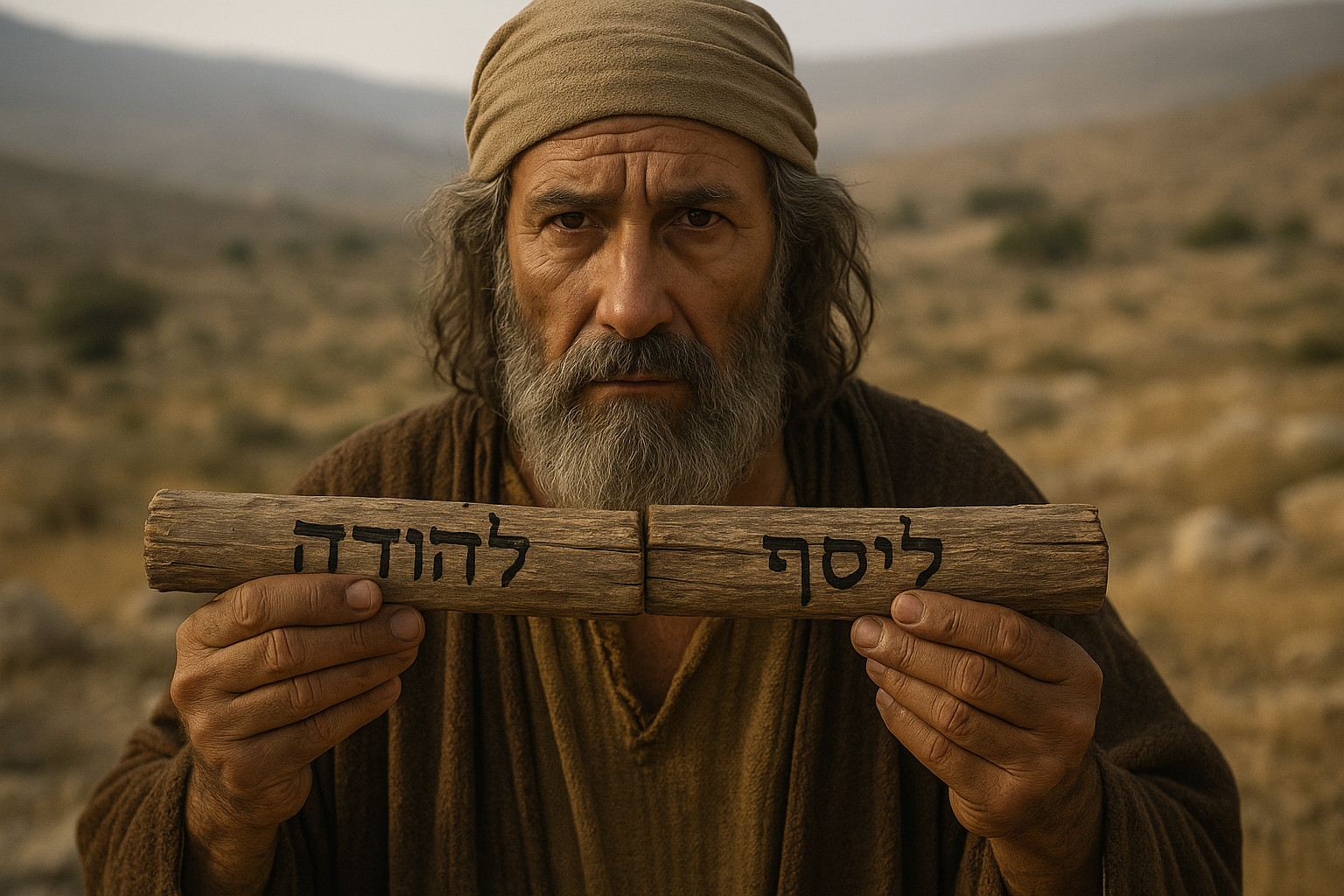
A Future for Israel in Romans 9-11
By Dr. Paul Hartog / March 30, 2026
James Montgomery Boice relayed the account of Frederick the Great, king of Prussia, conversing with his chaplain concerning the reliability of the Scriptures.1 always precedes orthopraxy.2 Correct doctrine always precedes correct practice. No one can function with biblical practice and methodology without first having correct beliefs...
Read More

Fulfilled Messianic Prophecies from the Book of Zechariah
By Dr. Keith Kobelia / September 15, 2025
Among the most intriguing prophetic sections of the Bible are the prophecies of Zechariah which are contained in the book that bears his name. Zechariah is teeming with Messianic prophecies,...
Read More
{"slides_column":1,"slides_scroll":1,"dots":"true","arrows":"true","autoplay":"true","autoplay_interval":"5000","speed":"1200","lazyload":""}
Spiritual Gifts: Essential, Expedient or Extra-Biblical?
Posted on by Dr. Manfred Kober
American Christianity today is characterized by an undue emphasis on spiritual gifts on the one hand and a great misunderstanding of these gifts on the other hand. All of us are dismayed by the sad spectacle of evangelicalism in disarray in matters of spiritual gifts.
I. The Controversy Concerning The Gifts
A. Position #1
The Pentecostal viewpoint is that all gifts are still bestowed today. To claim that some gifts have ceased with the Apostles, say our Pentecostal friends, is tantamount to denying miracles.
Dispensational Theology
Posted on by Dr. Myron J. Houghton
Introduction
Faith Baptist Theological Seminary is dispensational in its theology. Many people do not know what dispensationalism really is or how it affects the beliefs we hold. The purpose of this article is to explain dispensationalism by looking at some of our major beliefs.
The Bible
We believe that the Bible is God’s Word. All of its 66 books are inspired, and everything the Bible teaches is completely true. At the same time we recognize that the message found in the Bible is more greatly developed in the New Testament.
Is Redemption an Opinion?
Posted on by Dr. Robert Delnay
Christ died for our sins according to the Scriptures (1 Cor. 15:3).
Not long ago a missionary told how in a market near the cathedral a boy was hawking religious doodads. The boy was shouting, “Cheap crosses! Cheap crosses!” We may be able to match him. Professing Christians of our own day have found ways to minimize the doctrine of redemption.
Redemption is not quite the central doctrine of the Bible; to make it so has historically permitted earnest men to ignore the literal kingdom of Christ.
Hearing the Call of God
Posted on by Dr. George Houghton
The larger question asks, “Is there a specific and individual will of God for my life?” Equally controversial and debated is the related question which we wish to address: “Is there a specific and individual call by God to serve Him vocationally—a call to the ministry?” True, some have abused an affirmative response to these questions, but we shouldn’t dismiss or disown doctrine because of this. We need to see what God’s Word says.
As we approach the Scriptures to seek an answer to these questions, two issues of major importance surface: First, is the leading of God in my life ever subjective (inward, related to my personal experience) as well as being objective (outward, related to clear instruction from God in Scripture), or is His leading only objective?
The Evangelical Drift
Posted on by Dr. Robert Delnay
As a self-conscious movement, new evangelicalism has been with us almost half a century. Forty-five years have passed since the founding of the National Association of Evangelicals, forty since the opening of Fuller Seminary, and thirty-five since the shift at the Conservative Baptist Seminary. That was also the year that Billy Graham left Northwestern to go into evangelism full time. Thirty years have passed since Graham’s New York campaign. Ten years have passed since Quebedeaux finished writing The Worldly Evangelicals, and twenty-six have passed since I first heard Charles Woodbridge deliver one of his famous lectures on new evangelicalism.
The Missionary We Would Like to Produce
Posted on by Dr. Robert Delnay
Some years ago a notable Baptist leader was fond of remarking that the only thing more important than sending out a missionary is training a missionary worth sending out. There is much to be said for this idea and Faith Baptist Theological Seminary is concerned to see its graduates worthy of serving either abroad or at home. To this end we purpose to encourage several qualities in them.
1. Walk With God
“Not by might, nor by power, but by my spirit, saith the Lord of hosts” (Zech.
Why Support the Local Church?
Posted on by Dr. George Houghton
All sorts of religious organizations vie for our support today. While they may not wish to diminish the importance of the local church, they often run the risk of becoming competitive with it as they seek our time, talents and treasures. And in contrast with their glowing reports of what the Lord is doing through them, one’s experience with a local church may be disheartening. In such a time of discouragement we often tend to become slack in our attendance, withdraw our financial support and become less involved in its ministry.
Ecclesiastical Separation
Posted on by Dr. Robert Delnay
Nearly four centuries ago the Puritan William Perkins drew a useful distinction. He suggested that there is a working difference between error and heresy. He wrote that error of itself is no ground for breaking fellowship, that any doctrinal discrepancy between two Christians means that one or both are in error. The Bible does not on that account command them to separate from each other. Heresy is another matter; heresy is error, but error that strikes at the very roots of the faith, and heresy is always grounds for breaking fellowship.
“I Have Kept the Faith” — A Tribute to Dr. Gordon L. Shipp
Posted on by Dr. Myron J. Houghton
Faith Pulpit is issue-oriented. We planned it that way and intend to keep it that way! The sudden and unexpected death of our president has caused us to reflect on the direction in which he was leading the College and Seminary, to think about the issues he raised and considered important. We note these issues carefully because we, too, believe they are important, and because they serve as an occasion to remember and honor the godly legacy Dr. Shipp left us.
Vital Preaching
Posted on by Dr. Robert Delnay
We frankly affirm that we are concerned about preaching. As a seminary, we are here to produce expositors, men who can preach the Bible in the power of the Holy Spirit. We are concerned to do this, because we are determined that our products bring the blessing of God on churches.
It appears that preaching has fallen on hard times. It is hard to compete with the superstars of religious video. Even moderately good preaching seems great. The fearless sermons of past generations are gone.