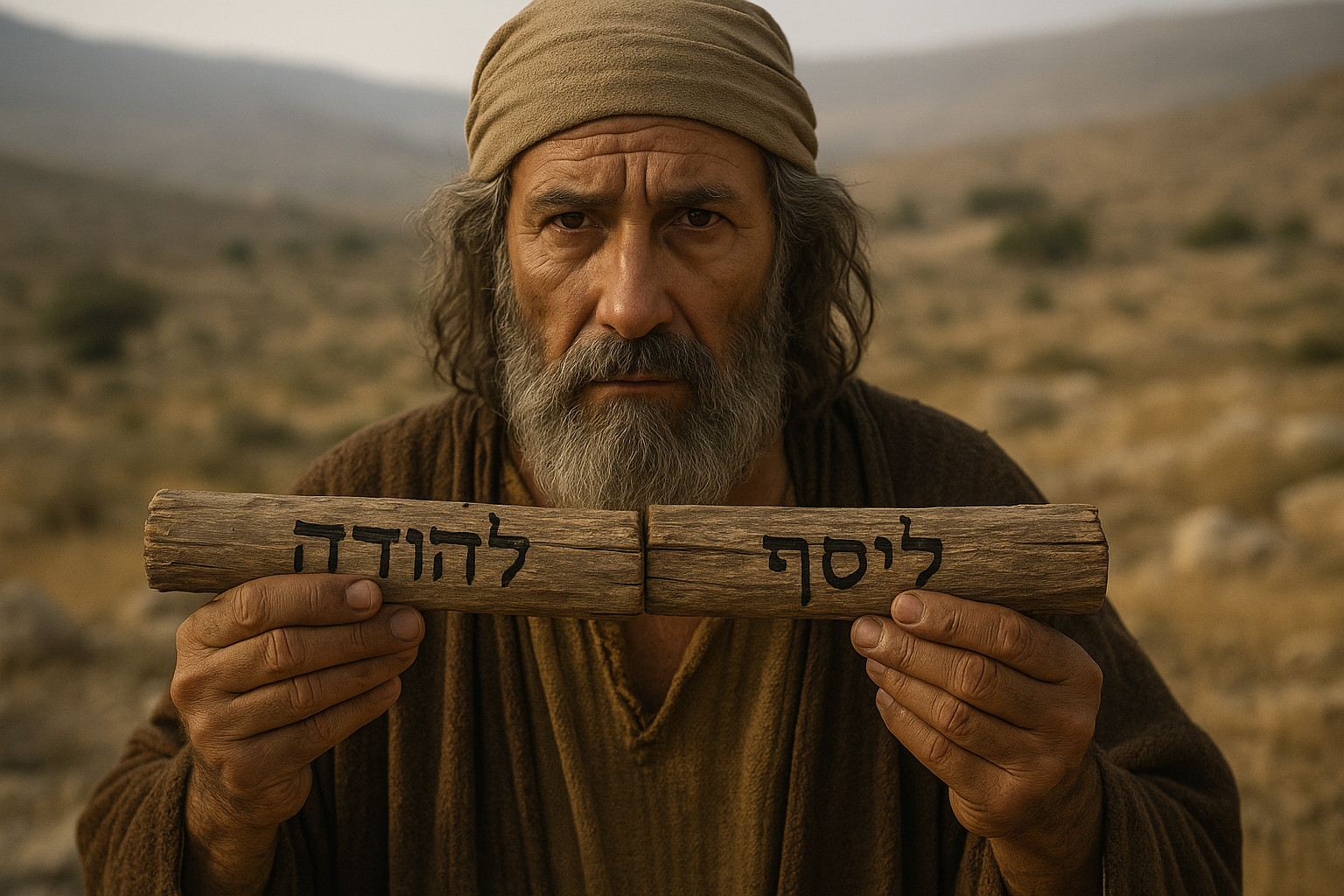
BLESSING AND DOMINION: The Role of Israel in God’s Restorative Purpose for Creation
By Dr. Mark Lounsbrough / July 1, 2026
The Bible is a storyline spanning Genesis to Revelation, replete with interactive themes similar to subplots that contribute to the main plot of a novel. Scholars summarize the key theme...
Read More

A Future for Israel in Romans 9-11
By Dr. Paul Hartog / March 30, 2026
James Montgomery Boice relayed the account of Frederick the Great, king of Prussia, conversing with his chaplain concerning the reliability of the Scriptures.1 always precedes orthopraxy.2 Correct doctrine always precedes correct practice. No one can function with biblical practice and methodology without first having correct beliefs...
Read More
{"slides_column":1,"slides_scroll":1,"dots":"true","arrows":"true","autoplay":"true","autoplay_interval":"5000","speed":"1200","lazyload":""}
Vital Preaching
Posted on by Dr. Robert Delnay
We frankly affirm that we are concerned about preaching. As a seminary, we are here to produce expositors, men who can preach the Bible in the power of the Holy Spirit. We are concerned to do this, because we are determined that our products bring the blessing of God on churches.
It appears that preaching has fallen on hard times. It is hard to compete with the superstars of religious video. Even moderately good preaching seems great. The fearless sermons of past generations are gone.
Why Should Women Attend Seminary?
Posted on by June Delnay
“Women in seminary? Who ever heard of such a thing?” A few years ago a woman probably would have gotten that disgusted response had she suggested attending some seminaries. In fact, twenty-five years ago, one might have had the impression that many seminaries looked on women as second-class citizens. Because she taught several home Bible classes for women and longed to be better versed in the Word and in the original languages, a friend of mine, as recently as four years ago, pled with a seminary dean to permit her to enroll in an all-male seminary.
The Unnoticed Baptist Distinctive
Posted on by Dr. Robert Delnay
Our recent Baptist literature has made a big point that we believe the Bible. In fact, the “B” in Baptist stands for the Bible. Historically we have believed that the Bible is the verbally inspired, inerrant Word of God. We also believe that God’s child should walk in obedience to its plain statements literally interpreted. Moreover, we will memorize passages of the Bible, thereby hiding it in our hearts. Of the four statements of faith that we have treasured in the last century and a half, all have said essentially these things.
The Mission Field of Youth
Posted on by Mel Walker
The statistics shout the facts. Over one-third of the population of the United States is under the age of 21. There are over 31 million teenagers in this country alone. The youth of America are a large mission field. Pure numbers alone indicate that teens desperately need to be reached by effective and relevant ministries.
The enormous number of young people is staggering; yet, those figures pale in comparison with those of the previous two decades. Even though the actual percentage of teenagers in America is dwindling the pressure facing adolescents are growing.
Committed to a Cause
Posted on by Dr. Gilbert Braithwaite
Faith Baptist Theological Seminary is not a new idea. We have reflected on the possibility of such a school for many years. This fall Faith Baptist Bible College gave birth to the Seminary in order to reaffirm and strengthen our basic commitment to Bible-centered education.
1. Faith
“Faith” is common to the names of both the Bible College and Seminary. Omaha Bible Institute began classes in 1921, with a desire to train well-equipped Christian workers. In 1952, the Board of Directors voted unanimously to declare their doctrinal and spiritual agreement with the General Association of Regular Baptist Churches, and to include “Baptist” in the school’s name.
Why Evangelism and Missions
Posted on by Dr. George Houghton
Why should evangelism and missions be high priorities for believers and local churches today? True, they are the proper things to do, and they carry an air of respectability as they are mentioned frequently in our circles. This is all well and good; but are we really burdened for the unsaved, and do we weep for those around the world who have never trusted Christ as Savior? And who is going to tell them about their Savior? What kind of strategy do we have individually and corporately to reach those close to us and those around the world with the gospel message?
New Testament Principles of Music
Posted on by Dr. Robert Delnay
Music tends to express the culture it comes in. Heroic music tends to coincide with heroic areas. Revivals have tended to express themselves in hymns of spiritual depth; and it is no accident that contemporary religious music expresses our own spiritual values.
While the Old Testament contains a whole literature of worship through music, the New Testament says surprisingly little about it. We read songs in Luke and revelation, but the New Testament verses that discuss music could be written on a 3×5 card.
Understanding Pastoral Theology
Posted on by Dr. Robert Domokos
Many years ago I read some words that came from Clarence E. Macartney which have been indelibly impressed on my mind. These words are, “The pastorate is the front-line trench of the ministry.” His little book entitled, Preaching Without Notes, is an inspiring and practical discussion of preaching. His love for pastoral preaching shows itself repeatedly throughout the book, and on page 175 he writes, “The minister’s occupation is appointed of God, not of man. The current tendency is to secularize the ministry, both its message and its office, as if the work of the minister were just the same as that of a teacher, a physician, a scientist, or an artist, only with a slightly different accent.
Seeing Answers to Our Prayers
Posted on by Dr. George Houghton
One cannot read widely about our Christian heritage without being impressed with the important place of fervent prayer in launching movements and spiritually sustaining great men and women of God in the past. Major periods of revival and evangelistic activity have usually been preceded by times of earnest prayer. Yet today we seem to find little time to spend in prayer. We are preoccupied with others things. We deceive ourselves by speaking of the quality of our prayers and not their quantity.
A Biblical Separatism
Posted on by Dr. Robert Delnay
Be ye not unequally yoked together with unbelievers: for what fellowship hath righteousness with unrighteousness? And what communion hath light with darkness? 1 Corinthians 6:14
Love not the world, neither the things that are in the world. If any man love the world, the love of the Father is not in him. 1 John 2:15
So why shouldn’t a Christian drink beer? What’s wrong with playing bingo or getting tattooed? What verse says you can’t listen to rock music?
We get into odd situations.