BLESSING AND DOMINION: The Role of Israel in God’s Restorative Purpose for Creation
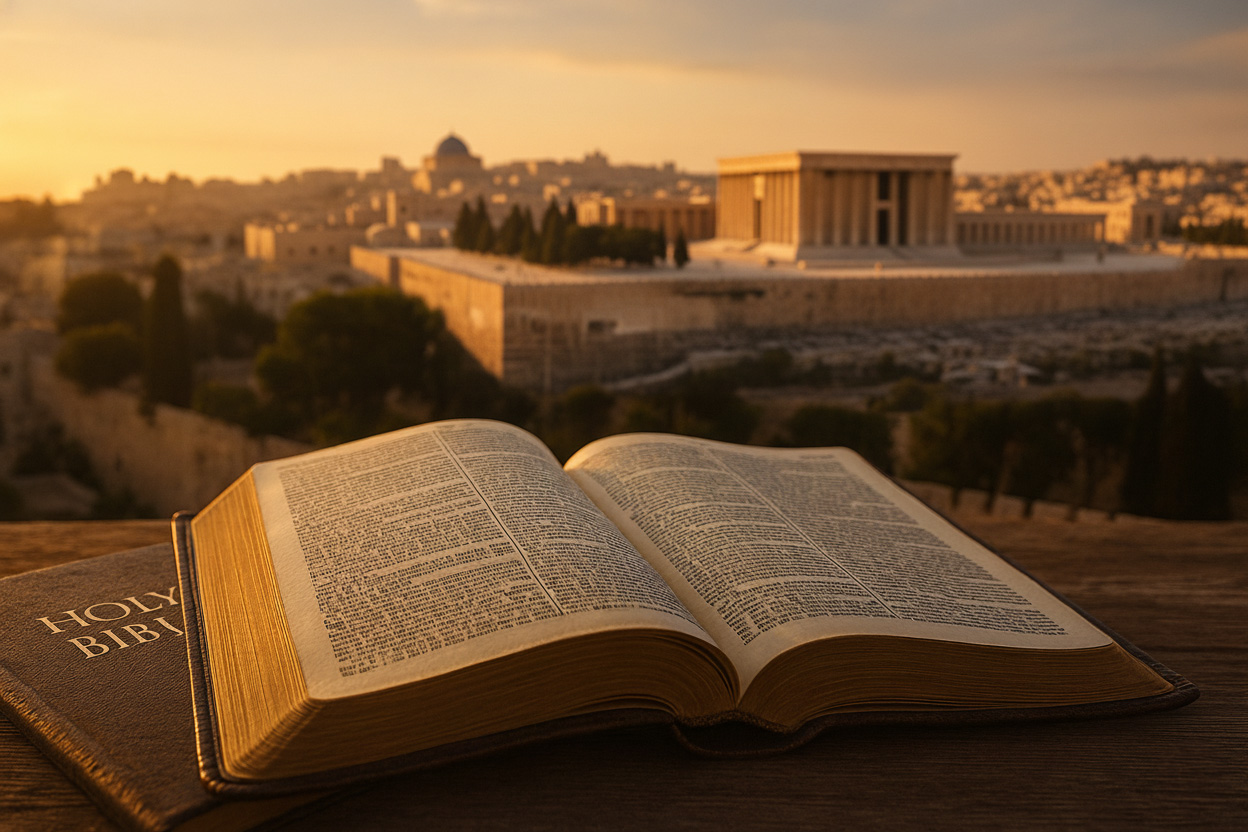
By Dr. Mark Lounsbrough / July 1, 2026
The Bible is a storyline spanning Genesis to Revelation, replete with interactive themes similar to subplots that contribute to the main plot of a novel. Scholars summarize the key theme...
Read More
A Future for Israel in Romans 9-11
By Dr. Paul Hartog / March 30, 2026
James Montgomery Boice relayed the account of Frederick the Great, king of Prussia, conversing with his chaplain concerning the reliability of the Scriptures.1 always precedes orthopraxy.2 Correct doctrine always precedes correct practice. No one can function with biblical practice and methodology without first having correct beliefs...
Read More
{"slides_column":1,"slides_scroll":1,"dots":"true","arrows":"true","autoplay":"true","autoplay_interval":"5000","speed":"1200","lazyload":""}
Personal Separation
Posted on by Dr. Manfred Kober
1. The Pattern of Separation
One of the recurrent themes of the Bible is that of separation. In the opening verses of the Word of God, the Creator separates light from darkness, water from land, and sky from sea. In the closing paragraphs of the Bible God separates the old earth from the new creation, the sinners from the saints, and the unholy angels from the holy angels.
Throughout His Word, God calls on His people to separate from evil. False worship, false doctrine, and false conduct are to be avoided (Ex.
What is Legalism?
Posted on by Dr. Myron J. Houghton
Introduction
This article is not really a book review. But it is a response to a very important issue raised by Charles Swindoll in his book Grace Awakening. While there are many helpful truths in the book, there are also several problems – one of which is his understanding of legalism. Because it is wrong and colors his thinking, it affects many of the other things on which he comments.
A Definition of “Legalism”
Swindoll’s book is a sustained attack on “legalism,” yet the term is not defined until page 81.
View on Ecclesiastical Separation
Posted on by Dr. Arthur Walton
FBBC&TS has long been associated with the separatist movement. It has stood against religious apostasy, and sought to maintain a Biblical position in the area of ecclesiastical relationships. Its institutional Statement of Belief states: “We believe that progressive sanctification involves separation not only from ungodly living but also from ungodly teaching; that though we love all men and seek their salvation, there are areas in which we cannot have fellowship with unbelievers; that, in areas of ecclesiastical fellowship, it may be necessary to separate even from our brethren in Christ, if they in turn maintain fellowship with unbelievers” (FBBC College Catalog, 1992–1995, p.
Chuck Colson and The Body Book
Posted on by Dr. Manfred Kober
Chuck Colson, special assistant to President Nixon and the hatchet man for that administration, became a Christian in prison during 1973. Three years later he founded Prison Fellowship International, a global ministry to prisoners and their families.
Over the past twenty years, Colson has become an influential voice in American evangelicalism. He has authored a number of significant books, beginning with his testimony in Born Again and Life Sentence. He continued with devotional and discipling books such as Loving God and Who Speaks for God?
The Doctrine of the Church and Its Identifying Marks
Posted on by Dr. George Houghton
There is much confusion these days over what the Bible teaches about the church. Here at Faith Baptist Bible College and Theological Seminary we are often asked what we believe in this area, and we are glad for the opportunity to set forth our convictions. There is much more that could be said about the church but these comments reflect our basic understanding of what the Scriptures teach.
Significance
We believe that the doctrine of the church is just as significant as any of the other grand teachings of Scripture.
A Conscious Awareness of God’s Presence
Posted on by Dr. Robert Domokos
Living with a conscious awareness of God’s presence is the desire of believers. Recently, in a prayer meeting, I heard someone pray “O Lord, be with us during this service.” God makes it very clear in His Word that He is always with us. Perhaps we need to pray that God would help us to be more consciously aware of His presence.
Have you noticed in your daily Christian experience that some Bible truths, at times, seem to be more distant than you think they should be?
The Eternal Sonship of Christ
Posted on by Dr. Myron J. Houghton
Every group claiming to be Christian teaches that Jesus Christ is the Son of God. The problem is: What does “Son of God” mean? What one thinks this title means will determine when one thinks Jesus became the Son of God. There are four major views on this issue.
View #1: Jesus is called God’s Son because he is the first and highest created being by God. This view rejects the Trinity and does not believe in the deity of Christ.
Biblical Unity
Posted on by Dr. Ralph G. Turk
The local church is not a building made of mortar, nor a human society, nor an informal gathering of believers, nor a club. Rather, it is a group of professing baptized believers in Christ who have organized themselves for the purpose of doing God’s will.
In effect, the local church is the sum total of all the believers in the assembly, not just the leaders or the uniquely gifted. The actual work of the church is not to be conducted by the “clergy,” some paid professionals, or by a select few.
Do We Really Know the Gospel?
Posted on by Dr. Manfred Kober
Each year, as I teach the doctrine of salvation, I give a quiz to test my students’ understanding of the Gospel. I ask them to imagine that they are in a hospital room, calling on an unbeliever who is at death’s door. The students have time for only twenty-five words to communicate the Gospel. After the 25th word, the patient has passed away. What would the students say in this situation? Are they able to express the Gospel so concisely that if the mortally ill person responds properly, he is saved?
The Authorship of Proverbs 30
Posted on by Dr. John Hartog, II
Problematic, difficult, and puzzling are three words sometimes used to describe Proverbs chapter 30. In fact, the problems of the first verse are so great that some Bible commentators say they are unsolvable. McKane (644) highlights the difficulties when he says, “In such a verse, where there is hardly a glimmer of light, one feels powerless to make even the first move towards its elucidation.” Let us wrestle with this verse and seek to find some answers.
One of the main problems which demands our attention is the problem of authorship.