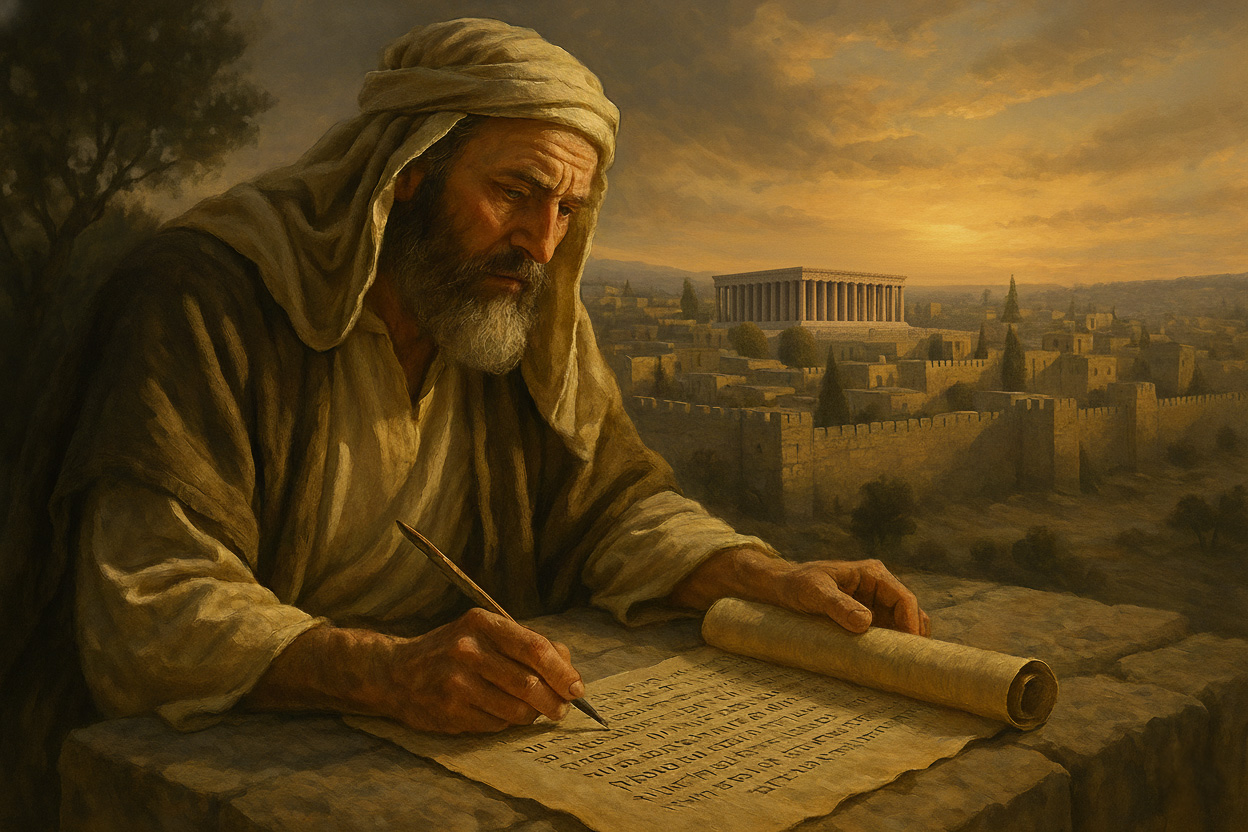
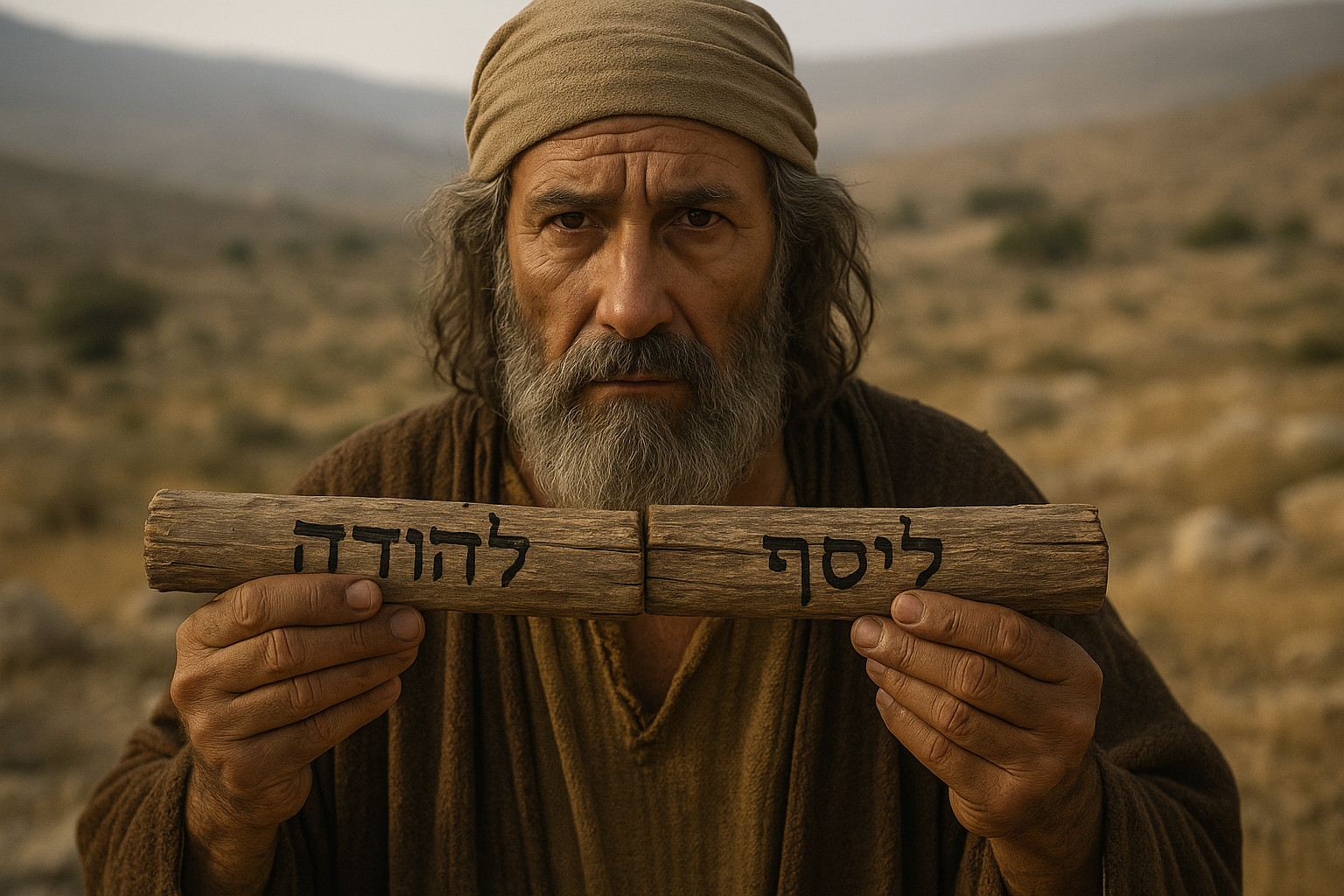
BLESSING AND DOMINION: The Role of Israel in God’s Restorative Purpose for Creation
By Dr. Mark Lounsbrough / July 1, 2026
The Bible is a storyline spanning Genesis to Revelation, replete with interactive themes similar to subplots that contribute to the main plot of a novel. Scholars summarize the key theme...
Read More

A Future for Israel in Romans 9-11
By Dr. Paul Hartog / March 30, 2026
James Montgomery Boice relayed the account of Frederick the Great, king of Prussia, conversing with his chaplain concerning the reliability of the Scriptures.1 always precedes orthopraxy.2 Correct doctrine always precedes correct practice. No one can function with biblical practice and methodology without first having correct beliefs...
Read More
{"slides_column":1,"slides_scroll":1,"dots":"true","arrows":"true","autoplay":"true","autoplay_interval":"5000","speed":"1200","lazyload":""}
Rote Memory
Posted on by Dr. Robert Delnay
In educational circles for the last half century or so, the words “rote memory” have become almost offensive to many. If the object of education is to teach people to think and to feel deeply, it seems either wasteful or damaging to require them at any level to memorize facts and lists. According to this idea, teaching rules of grammar may block the student’s creativity. Making him learn the multiplication table is a waste of his time when he can play store in school or buy a calculator cheaply in the check-out line.
A Call for Relevance
Posted on by Dr. Elvin K. Mattison
The need for relevance is a problem faced by most Christian workers today. However, this struggle is not new to our time. Even the Apostle Paul dealt with it. Historically, it has been the more liberal theologians who made relevance a key concern in the ministry. They cared more for people and their needs than for the Truth of God’s Word. Now it has become a significant factor in conservative theology. One of the more recent evidences of this change has been the ascension of relational theology and the decline of transactional theology.
Paul and the Pagans
Posted on by Dr. Paul Hartog
In Roman history, the term pagan refers to an individual who was neither Jewish nor Christian. In other words, pagans were non-Christian Gentiles. The Apostle Paul definitely knew some pagan literature. For instance, he quotes the poet Aratus of Cilicia in Acts 17:28: “For we are also His offspring.” And he quotes Epimenides, a Cretan poet, in Titus 1:12: “The Cretans are always liars, evil beasts, slow bellies [lazy gluttons].”
These are examples of Paul’s direct referencing of pagan poets. But a cursory survey of pagan literature can indirectly assist in the interpretation of other Pauline texts, as it places his letters in their cultural milieu.
Three Perils of Fundamentalism’s Next Generation
Posted on by Dr. Alan D. Cole
The twentieth century has closed, and the world has moved into a new era. With the passing of the 1900’s, Fundamentalism is at least one hundred years old. During this time, there has also been the passing of Fundamentalism’s first and second generations. There are few men, if any, who were alive at the formation of the movement, and there are decreasing numbers who saw the rise of New Evangelicalism and warned others of its dangers. For those who remain, their days of service and leadership are drawing to a close.
Family-Based Youth Ministry
Posted on by Dr. Douglas Brown
Perhaps no other area of Christian ministry thrives more on trends and fads than youth ministry. It is fascinating to peruse recent youth ministry periodicals and publications and to observe what new innovations youth ministers are trying. Some fads exhibit pure creativity; others push the envelope; a few are even disturbing; but most fade off the scene of youth ministry as soon as they appear. Youth ministers certainly have an inclination to stay on the “cutting edge” of youth culture. However, there is one trend infiltrating the ranks of youth ministry that is more than just a passing fancy; it is called family-based youth ministry.1 Over the past decade a flurry of articles and books have appeared promoting this new way of doing youth ministry.
The Virgin Birth: A Mystery to Be Cried Aloud
Posted on by Dr. John Hartog, III
The virgin birth refers to Mary’s miraculous conception of Christ through the power of the Holy Spirit, without any male participation, so that, though the birth process was not unlike that of other humans, Mary was still a virgin when Jesus was born. This Biblical doctrine should be distinguished from the Roman Catholic tenets of Mary’s immaculate conception and her perpetual virginity (Erickson, 179).
The Dogma of the Immaculate Conception
According to the dogma of the Immaculate Conception, Mary was “preserved free from all stain of original sin” (Ott, 199).
Functional Churches
Posted on by Dr. Ralph G. Turk
The local church is the only visible expression of the universal church, the body of Christ. As such, a living body must function consistently and well. In practical ways, though, how can the leaders of the local assembly bring Biblical body function into being? One fact remains startlingly clear. Christians do not grow in isolation. There needs to be a commonality with each other. Further, New Testament Christians were not given the choice as to whether or not they wished to function.
Effective Instruments for the Master
Posted on by Dr. John Hartog, II
Tragic current events, degradation of moral standards, and today’s warped philosophy may lead some to believe that we live in a hopeless situation. However, God is very much at work changing people’s hearts as He carries out His program for the ages. He has placed many of us in leadership positions in the local church, the primary vehicle for accomplishing His program in this present dispensation. To be effective instruments for the Master and His work in the church, we must be Godly leaders.
The Preservation of Scripture
Posted on by Dr. Myron J. Houghton
The Message of 2 Timothy 3:16–17
“All Scripture is given by inspiration of God” (2 Timothy 3:16). Another way of saying this would be, “all Scripture is God-breathed,” or “all Scripture comes from the mouth of God.” This means God is directly responsible for causing the Bible writers to put down everything that He wanted written without error and without omission. But what of the Bible I hold in my hand? Is it God’s Word? Can it be trusted? The answer is yes!
Resources For Preaching
Posted on by Dr. Robert Delnay
Those who have listened to preaching for at least a generation are likely to observe that it is not what it was. On the basis of both anecdote and memory, it is on balance neither as interesting nor as compelling as it was within living memory. Furthermore, the results are not the same. First-time adult decisions for salvation used to be relatively common in many churches every Sunday. Now such decisions have to be programmed, usually after inducing people to make decisions in their own homes and then persuading them to come to church to go forward.