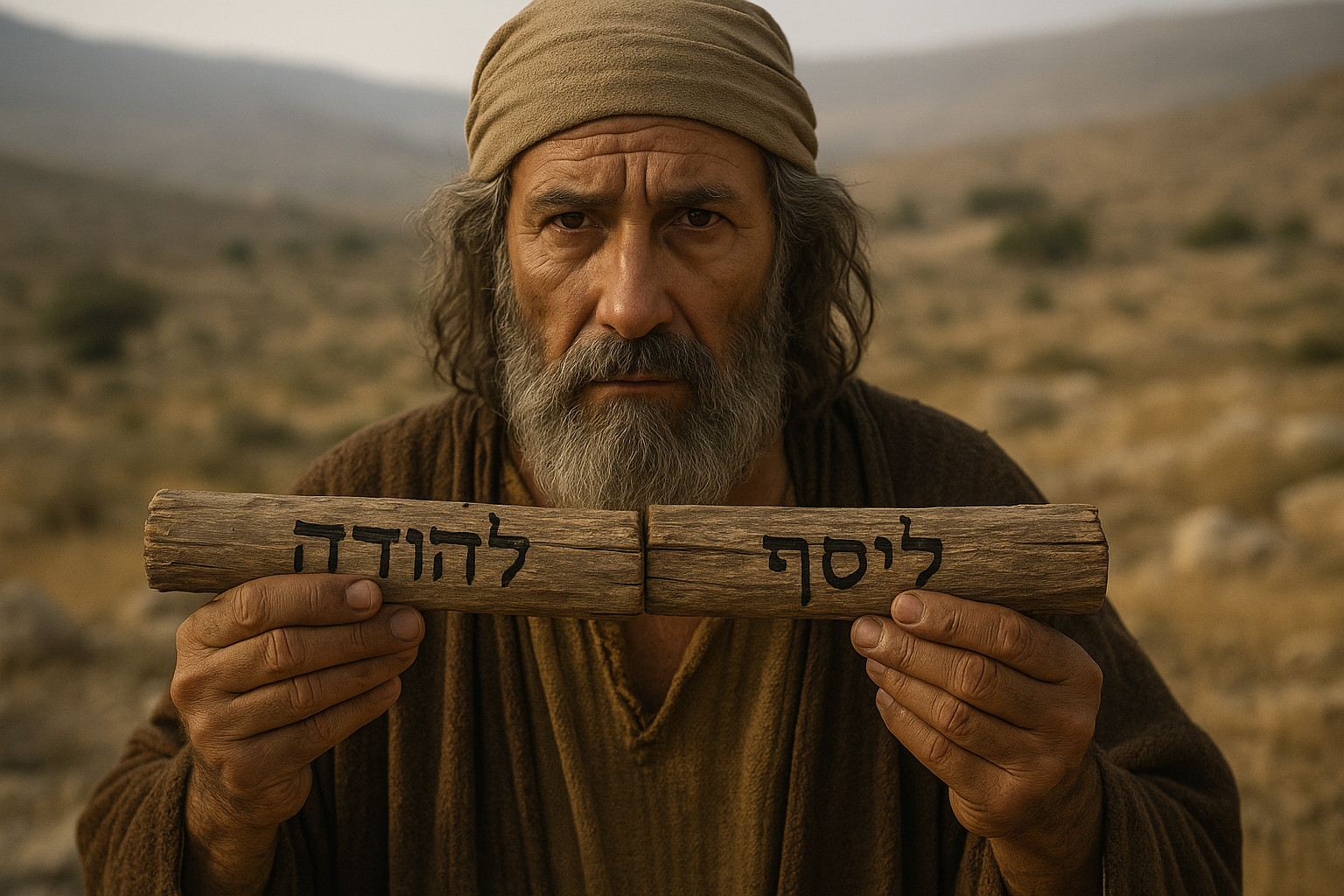
A Future for Israel in Romans 9-11
By Dr. Paul Hartog / March 30, 2026
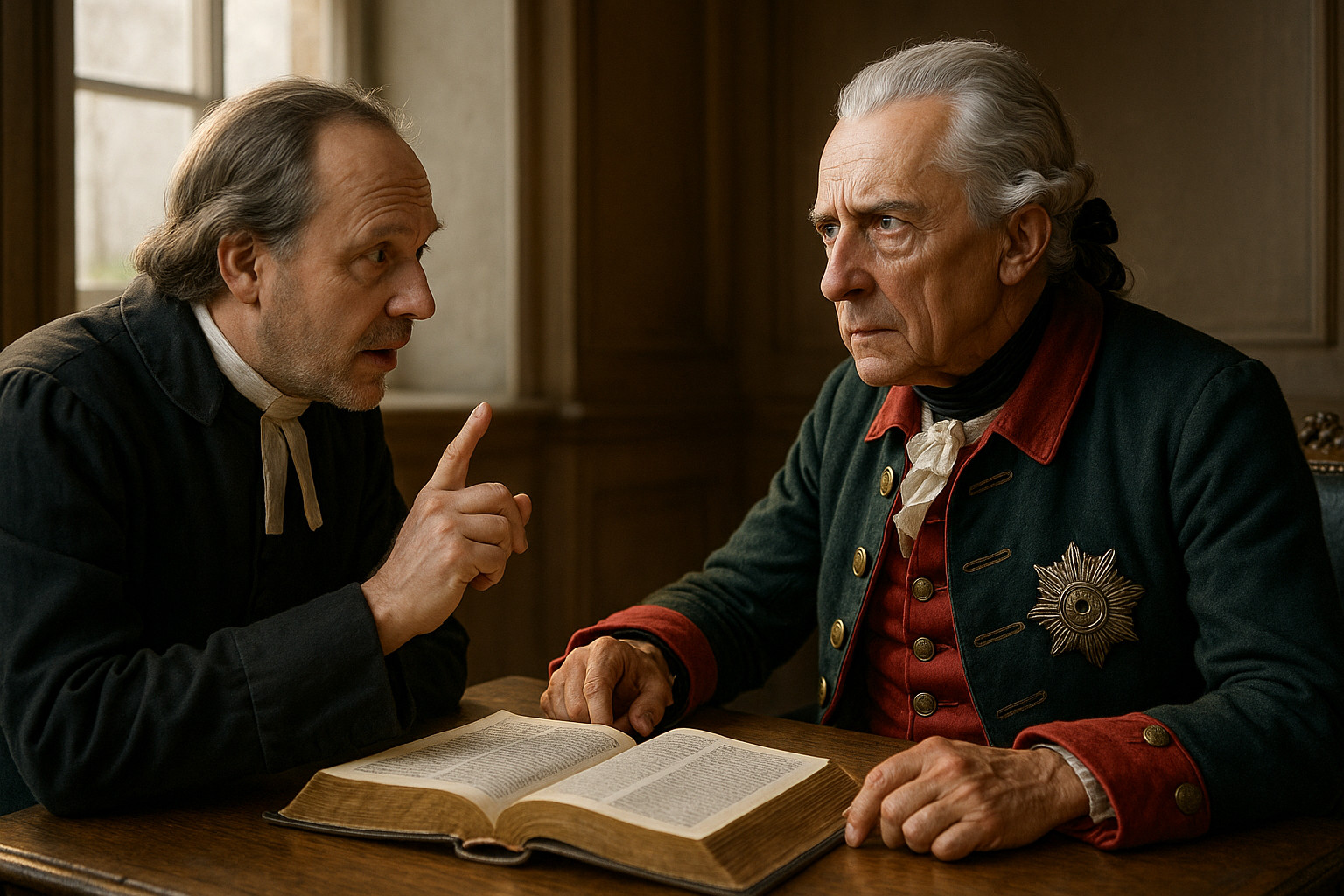
James Montgomery Boice relayed the account of Frederick the Great, king of Prussia, conversing with his chaplain concerning the reliability of the Scriptures.1 always precedes orthopraxy.2 Correct doctrine always precedes correct practice. No one can function with biblical practice and methodology without first having correct beliefs...
Read More

Fulfilled Messianic Prophecies from the Book of Zechariah
By Dr. Keith Kobelia / September 15, 2025
Among the most intriguing prophetic sections of the Bible are the prophecies of Zechariah which are contained in the book that bears his name. Zechariah is teeming with Messianic prophecies,...
Read More
{"slides_column":1,"slides_scroll":1,"dots":"true","arrows":"true","autoplay":"true","autoplay_interval":"5000","speed":"1200","lazyload":""}
When is a Church a Church?
Posted on by Dr. Ralph G. Turk
Many people are hopelessly confused by the maze of religious institutions that call themselves a church. The modern ecumenical movement has created an atmosphere quite hostile to any dogmatic, specific definition of a church. On the other hand, interdenominational thought, with its primary emphasis upon the “universal church,” and its accompanying “parachurch” organizations has given little thought to exacting definitions of the nature of a true local church. In the minds of many, the definition, organization, and function of a church are relatively unimportant, provided the church is reasonably biblical and functions as local churches traditionally function.
Pre-wrath Rapture: A Pretrib Evaluation
Posted on by Dr. Myron J. Houghton
(An evaluation of Dr. Robert D. Van Kampen’s book, The Rapture Question Answered. Grand Rapids: Fleming H. Revell, a division of Baker Book House, 1997)
I. An Explanation of the Pre-wrath Rapture View
“Plainly stated, the core truth is this: the persecution by Antichrist during the great tribulation will be the wrath of Satan (Rev. 12:12), not the wrath of God. When the sign of the sun, moon, and stars is given in the heavens, the wrath of Satan against the elect of God will be terminated, the faithful to God will be raptured, and then the wrath of God will begin against the wicked who remain, ending with the battle of Armageddon.
Happy Hanukkah!
Posted on by Dr. John Hartog, III
Judas Maccabæus instituted Hanukkah, which means “dedication,” to commemorate the consecration of the Temple, a ceremony made possible by his victory over the Syrian Greeks in 164 b.c.e. (1 Maccabees 4:36). This winter festival known as “the feast of the dedication” (John 10:22) or “Lights” (Josephus Antiquities xii 7:7), entails eight days of “joy and gladness” commencing on the twenty-fifth of Kislev (i.e., mid-December; 1 Maccabees 4:59). Observant Jews celebrate by kindling lights to memorialize the Hasmonean relighting of the Temple candelabrum (1 Maccabees 4:49, 50).
The Shepherds in Search of the Savior
Posted on by Dr. Manfred Kober
The birth of our Savior is surrounded by striking events. The story of the wise men journeying from afar with precious gifts to worship the Savior has captured the imagination of devout Bible students as well as poets and artists. There is another thrilling account which has excited both young and old. It is the angelic announcement to the shepherds and their adoration of the newborn child. Luke, the evangelist, records the intriguing incident in Luke 2:8–20.
I. The Revelation by the Heavenly Messengers: Luke 2:8–14
A.
Millennial Madness and the Year 2000 Parts 1 & 2
Posted on by Dr. Manfred Kober
The new millennium is bearing down at us at the rate of 3,600 seconds per hour – that magic moment when the cosmic odometer comes up with three zeroes.
The year 2,000 has been called “Father Time’s big day, Christianity’s horological cul-de-sac, a chronological, coinstantaneous, quadruple mind-blower: new year, new decade, new century, new millennium!” (William Ecenbarger, “Comes the Millennium,” Chicago Tribune Magazine, Feb. 18, 1996, p. 15).
Ecenbarger points out that “this epochal event will occur in the middle of the year 5760 according to Judaic reckoning, and in the year 1420 for the world’s Muslims.
The Problematic Development of Progressive Dispensationalism, Parts 1&2
Posted on by Dr. Manfred Kober
In recent years major changes have occurred within dispensationalism. A new system, known as progressive dispensationalism, has caused major concern among traditional dispensationalism
I. The Periods of Dispensationalism
Several periods of development within dispensationalism have been suggested.
The foundational period: 1885–1920 (John Nelson Darby, 1800–1882).
The classical period: 1920–1950 (C.I. Scofield, 1843–1921, Lewis Sperry Chafer, 187–1952).
The defining period: 1950–1990 (Alva J. McClain, John F. Walvoord, J. Dwight Pentecost, Charles C. Ryrie).
The progressive period: 1990 and on (Darrell L. Bock, Craig A.
Customary Restraints
Posted on by Dr. Robert Delnay
“And whatsoever things are …lovely…of good report,…think on these things” (Phil. 4:8).
“For the mystery of lawlessness doth already work” (2 Thess. 2:7).
In Western culture an aspect that helps make life tolerable comes under the heading of manners. We live under a whole complex of accepted ways of doing things, of introducing people, of eating, of choosing clothes, and of carrying ourselves. All these are part of culture, and in the more limited sense of that word, all tend to limit and guide the cultured person.
Promise Keepers: A Fundamentalist Evaluation
Posted on by Dr. Myron J. Houghton
Introduction
Contemporary American society is splintered into many one-issue organizations, groups composed of people who are diverse in their views on many subjects but who are united on one single issue.
This method was so successfully used by the civil rights movement in the 1950s that soon Americans saw the rise of groups advocating women’s rights, gay rights, etc. As a reaction, certain conservative religious leaders formed their own one-issue groups. In the 1996 updated version of his book The Conservative IntellectuaI Movement in America Since 1945, George H.
The Mysterious Magi: Sages Seeking the Savior
Posted on by Dr. Manfred Kober
In the German city of Cologne, on a hill high above the Rhine River, stands Germany’s largest cathedral. This impressive example of gothic architecture was built between 1248 and 1880. The purpose of this towering cathedral was to provide a suitable home for a spectacular golden shrine, containing according to Catholic tradition the mortal remains of the three wise men. The bones of Balthasar, Caspar and Melchior were brought here from Italy in 1164 and soon attracted hosts of pilgrims from throughout Europe.
Worship That Pleases God
Posted on by Dr. John Hartog, II
Genesis 4:3–8 describes this first act of worship recorded in human history. Two brothers, Cain and Abel, brought an offering to the Lord. Each worshipper brought something of his own as an offering to Jehovah. Cain brought some fruit or grain from the ground. Abel brought some lambs from his fold. The Lord respected Abel and his offering, but the Lord did not respect Cain and his offering.
Bible commentators have voiced several opinions as to why Abel’s offering was more excellent than Cain’s.